Introduction
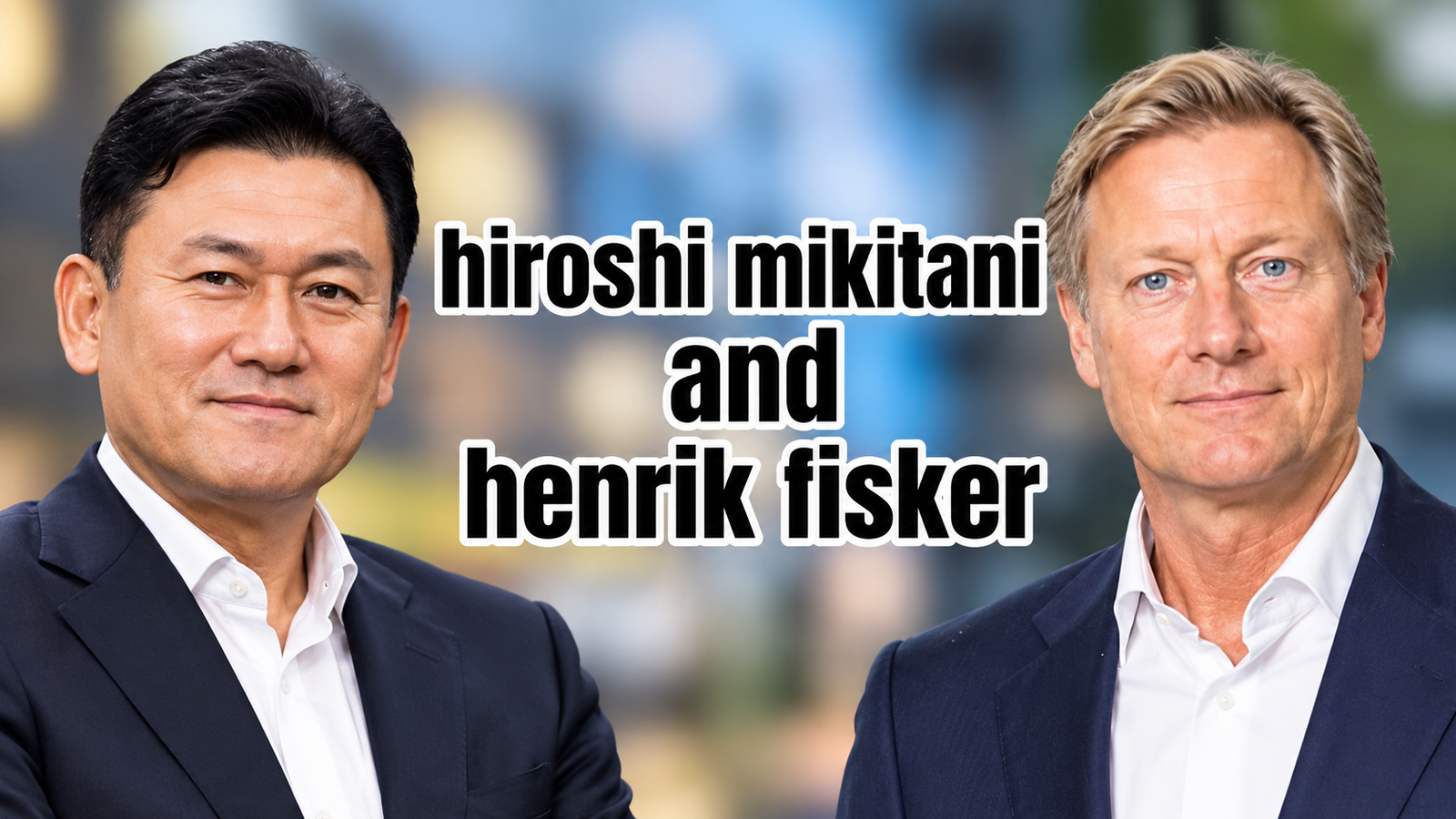
Hiroshi Mikitani and Henrik Fisker are two entrepreneurs who became known for their ambitious ideas and very different business journeys. Mikitani built Rakuten into one of Japan’s major internet and financial technology companies, while Fisker earned recognition for designing luxury vehicles and developing electric car brands.
Although their professional backgrounds are different, hiroshi mikitani and henrik fisker share an important characteristic: both were willing to take significant risks to turn their ideas into successful businesses. However, their results were very different. Rakuten continued to expand, while Fisker’s automotive companies faced serious financial difficulties and bankruptcy.
This article explores hiroshi mikitani and henrik fisker, including their backgrounds, education, professional achievements, business decisions, estimated wealth, and the lessons their careers offer to future entrepreneurs.
Quick Biography of Hiroshi Mikitani and Henrik Fisker
|
Details |
Hiroshi Mikitani |
Henrik Fisker |
|---|---|---|
|
Full name |
Hiroshi Mikitani |
Henrik Fisker |
|
Date of birth |
March 11, 1965 |
August 10, 1963 |
|
Age |
61 |
63 |
|
Birthplace |
Kobe, Japan |
Denmark |
|
Nationality |
Japanese |
Danish |
|
Profession |
Entrepreneur and business executive |
Automotive designer and entrepreneur |
|
Spouse |
Haruko Mikitani |
Geeta Gupta Fisker |
|
Education |
Hitotsubashi University, Harvard Business School |
ArtCenter College of Design |
|
Known for |
Founding Rakuten |
Fisker Karma and Fisker Ocean |
|
Net worth |
Estimated $3 billion–$4.5 billion |
Not publicly verified |
Personal details and financial estimates are based on the information provided and are not independently verified.
Is There Any Connection Between Hiroshi Mikitani and Henrik Fisker?
There is no publicly confirmed personal relationship, business partnership, or joint company involving these two entrepreneurs. Neither has been publicly established as an investor in the other’s business ventures.
The reason hiroshi mikitani and henrik fisker are interesting to compare is their shared experience of building businesses around ambitious ideas.
Mikitani believed online shopping could create new opportunities for Japanese retailers. Fisker believed attractive, environmentally conscious vehicles could change the automotive industry.
Their approaches eventually produced different outcomes. Mikitani developed a diversified business group, while Fisker’s automotive ventures struggled with production, financing, and commercial challenges.
Who Is Hiroshi Mikitani?
Hiroshi Mikitani is a Japanese businessman and the founder, chairman, and CEO of Rakuten Group.
He is widely recognized for helping develop Japan’s ecommerce industry. Rakuten operates across several industries, including online shopping, banking, financial services, travel, and telecommunications.
Early Life and Education
Hiroshi Mikitani was born on March 11, 1965, in Kobe, Japan. His father, Ryoichi Mikitani, was an academic, while his mother is named Setsuko.
He attended Hitotsubashi University in Tokyo, where he studied business and economics. After completing his education, he joined the Industrial Bank of Japan, gaining experience in finance and business operations.
Mikitani later earned an MBA from Harvard Business School in 1993. His international education helped shape his understanding of business development and technology.
The Kobe earthquake in 1995 reportedly influenced his perspective on life and professional risks. He subsequently decided to leave banking and establish his own business.
Building Rakuten Into a Major Company
In 1997, Mikitani launched Rakuten Ichiba, an online shopping marketplace. The platform initially worked with approximately thirteen merchants.
Instead of operating entirely like a traditional online retailer, Rakuten allowed independent sellers to manage their own online stores. This approach helped smaller businesses reach customers through the internet.
Rakuten went public in 2000 and continued expanding into additional industries.
Major Business Achievements
Some important developments in Mikitani’s career include:
-
Expanding Rakuten Travel into online travel services.
-
Developing Rakuten Card and other financial services.
-
Acquiring Viber in 2014.
-
Purchasing Ebates in 2014, later becoming Rakuten Rewards.
-
Investing a reported $300 million in Lyft in 2015.
-
Launching Rakuten Mobile to compete in Japan’s telecommunications market.
He also founded the Tohoku Rakuten Golden Eagles baseball team in 2004.
One of his most discussed business decisions came in 2010, when he introduced English as Rakuten’s official company language. This initiative became known as Englishnization.
Who Is Henrik Fisker?
Henrik Fisker is a Danish automotive designer and entrepreneur recognized for his work on luxury vehicles and electric car projects.
Unlike Mikitani, whose career developed around ecommerce and financial technology, Fisker focused on automotive styling, vehicle development, and electric mobility.
Early Life and Education
Henrik Fisker was born on August 10, 1963, in Denmark. From an early age, he developed an interest in automobiles and design.
He studied at the ArtCenter College of Design, an institution known for automotive design education. His studies helped him develop the skills needed to enter the international automotive industry.
His design philosophy focused on elegant shapes, distinctive styling, and modern vehicle appearances.
Automotive Design Career
Fisker worked with BMW’s design team in the United States. One of his best-known contributions was the BMW Z8, a luxury sports car that received considerable attention.
He later worked with Aston Martin, contributing to the design of vehicles such as the DB9 and V8 Vantage.
In 2005, he established Fisker Coachbuild with a business partner. The company developed customized luxury vehicles, including the Tramonto.
Fisker Automotive and the Karma
In 2007, Fisker founded Fisker Automotive. Its main vehicle was the Fisker Karma, a luxury plug-in hybrid sedan that attracted attention because of its distinctive appearance and technology.
The vehicle was positioned in the premium market, with a price of approximately $100,000.
However, the company experienced significant difficulties. Its battery supplier, A123 Systems, entered bankruptcy in 2012. Hurricane Sandy also reportedly damaged hundreds of Karma vehicles at a New Jersey port.
Fisker Automotive eventually filed for bankruptcy in 2013, ending its first major attempt to establish an independent automotive company.
Fisker Inc. and the Ocean SUV
Fisker returned to the electric vehicle industry in 2016 by establishing Fisker Inc. with his wife, Geeta Gupta Fisker.
The company became publicly traded in 2020 through a merger with a special purpose acquisition company.
Its main vehicle was the Fisker Ocean, an electric SUV manufactured by Magna Steyr in Austria. Customer deliveries began in 2023.
Despite attracting attention, the company encountered software problems, customer complaints, weak sales, and financial pressure. Production stopped in 2024.
On June 17, 2024, Fisker Inc. filed for Chapter 11 bankruptcy protection. A liquidation plan was subsequently approved, and American Lease purchased thousands of unsold Ocean vehicles for approximately $46.25 million.
The company’s financial collapse significantly affected its business prospects and the value associated with its shares.
Hiroshi Mikitani and Henrik Fisker Net Worth Comparison
The financial difference between these entrepreneurs is considerable. Hiroshi Mikitani has accumulated substantial wealth through Rakuten and other technology investments. Henrik Fisker’s financial position is less transparent because his automotive companies experienced major financial difficulties.
Hiroshi Mikitani Net Worth
Hiroshi Mikitani’s estimated net worth is approximately $3 billion to $4.5 billion. Forbes listed his real-time fortune at around $3.2 billion on November 16, 2026.
His wealth mainly comes from:
-
His ownership stake in Rakuten Group.
-
Investments in technology and other businesses.
-
Holdings in companies such as AST SpaceMobile.
-
Business interests and other private ventures.
Although Rakuten has faced financial pressure because of its expensive mobile network expansion, Mikitani remains one of Japan’s wealthiest entrepreneurs.
Henrik Fisker Net Worth
Henrik Fisker’s exact net worth is not publicly confirmed. Some online estimates have previously suggested approximately $200 million, but this figure is not independently verified.
Much of his business-related wealth was connected to Fisker Inc. shares. Following the company’s bankruptcy, those shares lost nearly all their value.
Consequently, it would be inaccurate to present an old online estimate as his confirmed current fortune.
|
Financial detail |
Hiroshi Mikitani |
Henrik Fisker |
|---|---|---|
|
Estimated net worth |
$3 billion–$4.5 billion |
Not publicly verified |
|
Main wealth source |
Rakuten and investments |
Automotive businesses |
|
Business position |
Rakuten continues operating |
Fisker Inc. liquidated |
|
Financial direction |
Substantial established wealth |
Significant business setbacks |
When examining hiroshi mikitani and henrik fisker, their business strategies reveal important differences.
Different Business Models
Mikitani developed Rakuten as a diversified business ecosystem. It operates in ecommerce, financial services, travel, and telecommunications.
This structure gives the company several sources of revenue. When one business faces difficulties, other operations can continue supporting the wider organization.
Fisker’s business model depended heavily on developing and selling vehicles. Both the Karma and Ocean attracted attention, but their companies struggled to establish sustainable operations.
Risk Management and Business Decisions
Both entrepreneurs were comfortable taking significant risks. However, they approached business development differently.
Mikitani expanded Rakuten into multiple industries, although its mobile network investment created substantial financial pressure.
Fisker relied on external manufacturing and technology partners for important parts of vehicle development. This approach reduced the need to own every production facility but also created challenges involving quality, coordination, and customer support.
The bankruptcy of Fisker Inc. in 2024 demonstrated how difficult it can be for a new automotive manufacturer to manage production, financing, and customer expectations simultaneously.
Career Comparison Table
|
Category |
Hiroshi Mikitani |
Henrik Fisker |
|---|---|---|
|
Industry |
Ecommerce and fintech |
Automotive and electric vehicles |
|
Main company |
Rakuten |
Fisker Inc. |
|
Major achievement |
Building a major internet business |
Designing luxury vehicles |
|
Famous product |
Rakuten Ichiba |
Fisker Karma and Ocean |
|
Main strength |
Business expansion |
Automotive creativity |
|
Major challenge |
Mobile network losses |
Financial and production problems |
|
Overall outcome |
Continued business expansion |
Two automotive bankruptcies |
Important Lessons From Hiroshi Mikitani and Henrik Fisker
The experiences of hiroshi mikitani and henrik fisker offer useful lessons about entrepreneurship, leadership, and long-term planning.
Lessons From Hiroshi Mikitani
-
Start with a clear idea: Rakuten began with a relatively small group of merchants before becoming a major online marketplace.
-
Support business partners: Giving independent sellers opportunities helped Rakuten develop its marketplace.
-
Think internationally: Mikitani’s Englishnization initiative reflected his ambition to build a globally competitive company.
-
Explore new industries: Expanding into financial services, travel, and telecommunications helped diversify Rakuten’s operations.
Lessons From Henrik Fisker
-
Design needs strong business planning: An attractive product cannot guarantee commercial success.
-
Production quality matters: Customers expect reliable vehicles and effective after-sales support.
-
Financial planning is essential: Manufacturing businesses require substantial funding and careful cash management.
-
Customer confidence is valuable: Technical problems and delayed solutions can damage a company’s reputation.
Frequently Asked Questions (FAQs)
1. Who is richer, Hiroshi Mikitani or Henrik Fisker?
Hiroshi Mikitani is considerably wealthier. His estimated net worth is between $3 billion and $4.5 billion, while Henrik Fisker’s current wealth has not been publicly verified.
2. What is Hiroshi Mikitani famous for?
He is famous for founding Rakuten Group in 1997. The company became one of Japan’s major ecommerce and internet services businesses.
3. What is Henrik Fisker known for?
Henrik Fisker is known for designing luxury automobiles, including the BMW Z8 and Aston Martin DB9. He also founded Fisker Automotive and Fisker Inc.
4. Are Hiroshi Mikitani and Henrik Fisker business partners?
No publicly confirmed business partnership between them is known. Their careers are compared because both built companies around ambitious ideas.
5. When did Fisker Automotive become bankrupt?
Fisker Automotive filed for bankruptcy in 2013 following financial difficulties and problems involving its battery supplier.
6. When did Fisker Inc. file for bankruptcy?
Fisker Inc. entered Chapter 11 bankruptcy proceedings in June 2024 after experiencing financial problems, weak sales, and production challenges.
7. Where did Hiroshi Mikitani receive his education?
He studied at Hitotsubashi University in Japan and earned an MBA from Harvard Business School in 1993.
8. What was the Fisker Ocean?
The Fisker Ocean was an electric SUV developed by Fisker Inc. It was manufactured by Magna Steyr in Austria, with customer deliveries beginning in 2023.
9. Does Rakuten still operate?
Yes. Rakuten continues operating as a major Japanese internet services group, with businesses across ecommerce, fintech, digital content, and communications.
The stories of hiroshi mikitani and henrik fisker demonstrate two different outcomes of entrepreneurial ambition. Mikitani transformed an online shopping concept into Rakuten, a major international business group. Fisker built a reputation through automotive design and attempted to establish successful electric vehicle companies, but both of his major automotive ventures experienced bankruptcy.
Their careers highlight an important business principle: having an innovative idea is only the beginning. Effective management, financial planning, product quality, and customer trust are equally important.
By studying hiroshi mikitani and henrik fisker, readers can understand why business success depends not only on creativity and ambition but also on the ability to turn ideas into sustainable operations.